

How to Move to Italy Legally: Every Visa Path in 2026
A blunt guide to every legal way to relocate to Italy this year, from digital nomad visas to citizenship by blood.

A day will come that changes your life. It might be on a random Tuesday. You’ll be sitting there at your desk, half bored. Perhaps, you’ll start browsing your Italy vacation photos and think to yourself, “that was a magical time.”
The weather was nice, the food and the wine delicious, people were friendly and by golly, so well dressed. In an act of courage and slight recklessness you finally tell yourself that you’re going to move to Italy!
It’s more of an admission than a decision, because your heart already decided it during your trip; it’s just your mind finally catching up to it.
You’re excited and you should be. However, the romantic part is easy. You don’t have to worry about keeping that passion alive. Italy is a country that will constantly make you fall in love over and over again.
What you do need to worry about is the legality of you moving there. Because Italy will quickly remind you that it’s a real country, with laws, consulates, police stations, and a penchant for bureaucratic rigor that would make Franz Kafka himself weep.
There are at least nine different answers to the question of how to move to Italy legally in 2026. Pick the wrong one, and you just wasted a year.
My Italian students ask me about this constantly and there are a lot of myths and misinformation online, so I decided to put together a current, accurate guide with every legal path to living in Italy.
If You’re an EU or EEA Citizen, Stop Reading
Citizens of the European Union (EU) plus Iceland, Liechtenstein, Norway, and Switzerland can live and work in Italy without a visa.
So if you hold a, say, French, German, or Romanian passport, you can waltz through Italy. Your only obligation is to register with the anagrafe (civil registry office) of your local comune (town) if you stay for longer than 90 days. That’s it. As easy as it can possibly get.
Go find an apartment and start learning Italian. For everyone else: buckle up.
Italian Citizenship by Descent (Jure Sanguinis): The Rules Changed in 2025
This used to be the golden ticket. You simply had to find one Italian ancestor born after the unification of Italy (1861) and you could claim citizenship regardless of how many generations had passed. Essentially, half of Brazil and Argentina qualified under these old rules.
As we say in Italy, “la pacchia è finita.” The party’s over.
As of May 2025, citizenship by descent requires you to have at least a parent or grandparent born in Italy. Provided you applied after March 27, 2025, the new rules apply, and your great-grandpa no longer gets you an Italian citizenship.
The actual implementation depends on individual consulates and comuni, but the direction is clear. They are closing the doors for people who have distant Italian relatives.
Aside from having applied before the cut off date, the only other exception to the new rule are the so-called 1948 cases. If your line of descent passes through an Italian woman who had a child before 1948, you might qualify for citizenship and your case is handled through Italian courts as it did before the new rules.
If you still qualify under the new rules, or you fit the exception, I’d highly suggest gathering your documents and applying sooner rather than later at your local Italian consulate. Some of them have multi-year backlogs.
Alternatively, and this is the fastest route, apply directly in Italy by establishing temporary residence in a smaller comune. This can often get you through the process in a matter of months instead of years.
For your documents, you’ll want the usual suspects: birth, marriage, divorce, and death certificates for every Italian person in your lineage. Apostilled and translated, of course.
The Digital Nomad Visa: Italy’s Newest Option
Launched in 2024, the Digital Nomad Visa allows people who work for a remote company or have clients based outside of Italy to live and work in Italy.
There are some requirements but they are not particularly strict:
A minimum annual income of approximately €28,000 (about €2,333 per month).
Health insurance covering at least €30,000.
Proof of accommodation in Italy (a real rental contract, not an Airbnb).
A clean criminal record.
Evidence of being a highly skilled worker. What does it mean? Highly subjective but they tend to be quite lenient about it. Have a degree or at least three years of documented professional experience, and you’ll be fine.
This visa is annual and is renewable. Plus, there are currently no quota caps imposed by the Italian government. After five continuous years of having it, you can apply for permanent residency. After ten, citizenship.
A few caveats:
Your income should mostly come from non-Italian clients.
Your rental or investment income doesn’t count. This has to be remote work, not passive income.
Application processing varies and tends to be slow, but since it’s a visa and not a citizenship application, we are talking 15-60 days at most, not years.
For couples, the income threshold becomes roughly €34,000 per year. Every additional child adds about €1,550.
Tax-wise, you can potentially qualify for the impatriati regime which slashes your fiscal load by 50%. Plus, several southern regions have their own incentives on top of that. Talk to a relocation specialist or commercialista (Italian tax accountant) before you move, not after.
The Elective Residency Visa (Italy’s Retirement Visa)
If you have passive income and don’t plan to work in Italy, you can opt for the visto per residenza elettiva. It’s the classic “retire to Italy” visa.
You’ll need approximately €31,000 per year for a single applicant and €38,000-€40,000 for a married couple.
So if your pension, dividends, or rental income from outside Italy amount to at least those thresholds, you qualify. Keep in mind, this has to be passive income, not remote work. With this visa, you are in Italy to retire and live “la dolce vita” (a marketing term Italians are not fond of, as they feel they work all the time only to make ends meet).
Apply at the Italian consulate in your country. You’ll need proof of passive income (tax returns, bank statements, pension letters), proof of accommodation in Italy (again, not Airbnb), and the usual health insurance with €30K coverage.
Much like the digital nomad visa, if approved, you get a one-year visa, renewable annually. After five years, you’re eligible for permanent residency. After ten years, and a B1 Italian test, citizenship.
This visa is genuinely designed for people who want to sit on a terrace with a glass of wine and not think about work. If that’s you, and you can prove the passive income, it’s very straightforward.
If you’re trying to sneak remote work in under the table, don’t. Opt for the more applicable visas. Italy’s tax authorities are used to catching furbi (cunning schemers). If you try to circumvent the visa restrictions, they will catch you and punish you for it in very unpleasant ways.
The Work Visa and the Decreto Flussi

If you are not Italian by blood, don’t plan to work for foreign companies, nor retire in Italy, your next best option is the decreto flussi. It’s Italy’s annual immigration quota system. It’s not for the faint of heart.
Every year, the Italian government sets a cap on how many non-EU workers can enter the country. For 2026, that’s 165,850 or so. It sounds generous, but it actually isn’t. Half of them go to seasonal agricultural and tourism workers. Your Italian employer (if you can find one bothering with it), will compete online with other employers during designated “Click Day” windows. The sobering reality is that the entire agricultural quota was gone in 20 minutes in 2025.
Your employer has to apply for you, essentially sponsoring you. They must prove that no European worker is available for the job. They must pay fees and deal with delays in paperwork. And they are limited to three applications per year.
It’s a viable option if you have a very motivated prospective employer, but it’s one of the most difficult visa options.
Keep in mind that if you’re a highly skilled worker in STEM or Information and Communications Technology (ICT) management, there’s a separate out-of-quota process that bypasses the Click Day chaos. If this is you, ask a relocation specialist or an immigration lawyer about this.
The Investor Visa (Golden Visa): Buy Your Way In
Italy’s Investor Visa program, launched in 2017, grants a two-year renewable residence permit in exchange for a large-ish investment.
If you have the money, this is the easiest way to buy your way into Italy.
The four investment options, in ascending order of cost are:
€250,000 into an innovative Italian startup. This is the cheapest option but also the riskiest because startups are unproven and fail all the time.
€500,000 into an Italian limited company. You buy 500K worth of shares (listed or unlisted) and you’re in. Since you can opt for an established company, this is double the money but safer.
€1,000,000 as a philanthropic donation to a project of public interest.
€2,000,000 into Italian government bonds with a remaining maturity of at least two years. The price of literal admission is high but the risk profile is great.
You cannot combine options. You cannot use real estate. Buying a villa in Puglia doesn’t qualify, no matter how much it costs. You cannot make the investment before your visa is approved; you have three months after arriving in Italy to complete it.
The process starts online through the Investor Visa portal, where you apply for a nulla osta certificate. Processing typically takes 30 to 90 days. Once approved, you apply for the visa at your local Italian consulate, enter Italy, and file for your residence permit.
With Portugal and Spain having tightened or removed their golden visa programs, Italy’s has seen a lot more interest in this visa program.
There’s also a flat-tax option aimed at wealthy foreigners. You can opt for a €200,000 per year flat tax on all foreign income, with each additional family member paying just €25,000 annually. If you make truly a lot of money outside of Italy, this can be a bargain compared to paying regular taxes.
The Student Visa: A Backdoor Worth Knowing About
Enroll in an Italian university, and you can get a student visa. Italy is home to some of Europe’s oldest and most respected universities: the University of Bologna (founded in 1088, the oldest in the Western world), Sapienza in Rome, Politecnico di Milano, the Scuola Normale Superiore di Pisa, etc.
Tuition at public universities is often shockingly low by North American standards, sometimes under €2,000 per year depending on income.
The visa allows you to work up to 20 hours per week, so you won’t need to rely just on savings for the duration of your studies. The permit lasts one year and is renewable for the duration of your studies.
And here’s the part that matters for long-term planning: after graduation, you can convert your student permit to a work permit without leaving Italy, either through the decreto flussi quota (the toughest route) or through dedicated post-graduation pathways that some employers and sectors offer.
You’ll need proof of enrollment, proof of financial means, and health insurance as usual. It’s a remarkably easy way to, de facto, relocate to Italy long-term.
The Self-Employment Visa (Lavoro Autonomo)
Freelancers, entrepreneurs, and small business owners have a dedicated path to live and work in Italy, but it’s part of the same quota system as the workers sponsored by Italian employers.
The decreto flussi reserves a small number of slots for self-employed workers. And I do mean small. Think in the order of 500 for startup founders. More for other, more general self-employment.
You’ll need to demonstrate proof of income/business activity, hold the professional qualifications required by Italian law for your trade (if applicable), and show that your business is viable.
The permit lasts one to two years. This route is slow, competitive, and generally requires an immigration specialist to navigate. Personally, I wouldn’t recommend it, although it might be the only viable option for some.
The Startup Visa: For Entrepreneurs with Innovative Ideas
If you’re building an innovative startup, Italy offers a fast-track visa outside the regular quota system.
The key requirement of the startup visa is that your company qualifies as an “innovative startup” under Italian law, which generally means it’s a new company, in the tech or STEM space, with certain revenue and R&D thresholds.
This is a genuinely fast track with fewer bureaucratic hurdles and tax incentives. However, it’s a niche option for a specific type of entrepreneur, not a general immigration tool.
Family Reunification
If your spouse, minor children, or (in some cases) dependent parents are legal residents of Italy, you can apply for the family reunification visa.
Your family sponsors you and must demonstrate adequate income and housing. Processing time is 90 to 150 days.
Citizenship by Marriage and Naturalization
Two more paths to full Italian citizenship, not just residency:
Citizenship by marriage requires two years of marriage to an Italian citizen if you’re living in Italy (three years if living abroad, less with a child who is a minor). You’ll need B1-level Italian proficiency, a clean criminal record, and proof of income. This is the route my fiancée Alicia will take when we get married. Processing can take up to three years. In the meantime, a permesso di soggiorno (residence permit) will get them in the country alongside you. (More on this below.)
Citizenship by naturalization is available after ten continuous years of legal residency in Italy (fewer for EU citizens and those with specific Italian ancestry requirements). You’ll need B1 Italian, proof of income, a clean criminal record, and evidence of integration into Italian society. “Integration” is vague on purpose. It’s at the discretion of the reviewing authority.
The Permesso di Soggiorno: The Document That Rules Your Life
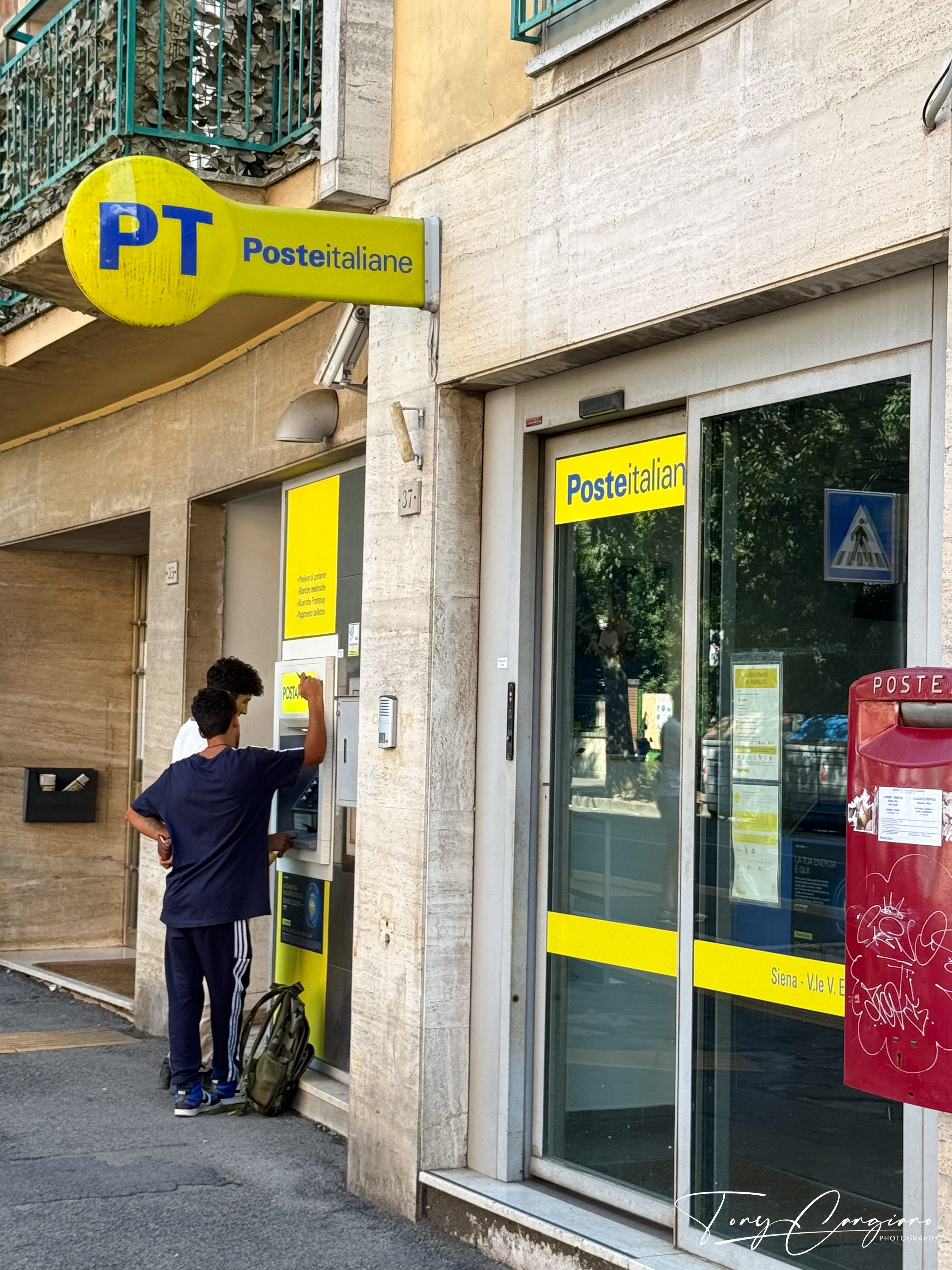
Regardless of which visa you get, once you land in Italy, you have eight days to apply for a permesso di soggiorno at your local questura (police headquarters).
You start at the post office, of all places, filling out a “kit” form. Then you go to the questura for fingerprinting and document review. Then you wait.
The permesso is the document that lets you stay, work, access healthcare, rent an apartment, open a bank account, and exist in the Italian system. Without it, you’re a tourist on borrowed time.
Processing times vary absurdly by city. Florence can take eight months. Lucca, in the same region, might take eight weeks. A small comune, even less. Your postal receipt acts as a temporary permit while you wait, but it’s annoying to live in limbo.
You’ll also need a codice fiscale (tax identification number), obtainable at the Agenzia delle Entrate. Think of it as Italy’s version of a Social Security number or Canadian Social Insurance Number, except less private.
(If I know your name, date and place of birth, I can look up your codice fiscale. The generating algorithm is neither secret nor random.)
You’ll need it for everything: signing a lease, opening a bank account, seeing a doctor. Get it before you arrive if possible, through your nearest Italian consulate.
Which Path Is Actually Right for You?
Here’s my honest breakdown.
If you have an Italian parent or grandparent born in Italy: citizenship by descent, assuming you qualify under the new Tajani rules.
If you work remotely and earn over €28,000: the digital nomad visa. It’s the simplest path for most working-age non-EU citizens in 2026.
If you’re retired with passive income over €31,000: the elective residency visa.
If you have €250,000 or more to invest and want maximum flexibility: the investor visa.
If you have a job offer from an Italian employer: the work visa, but prepare for bureaucratic combat.
If you’re a student: enroll first, figure out the rest later. It’s a legitimate long-term strategy.
And whatever you do, know what you’re getting into. Moving to Italy and visiting Italy are different sports.
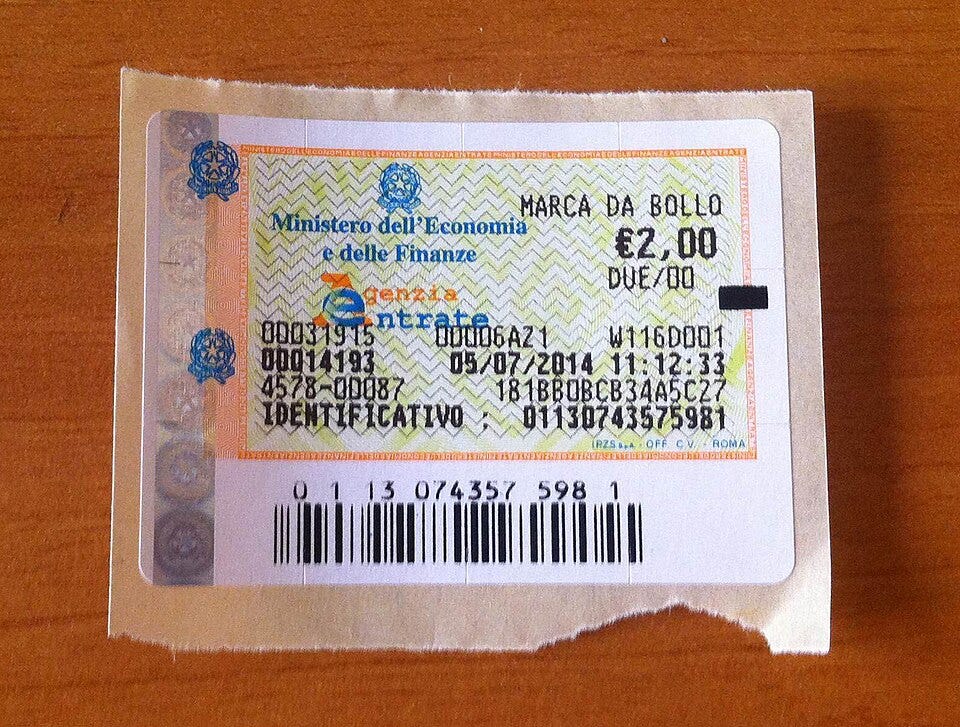
One is a vacation. The other is a relationship with a country that loves you but also loses your paperwork, makes you wait in lines that move sideways, and charges you €16 for a holographic stamp (a marca da bollo) at a tobacco shop, of all places. (Okay, technically you can pay online for it on PagoPA.)
It’s still worth it. But go in with your eyes open, your documents apostilled, and a good commercialista on speed dial.
Which path are you considering or have taken? Have you started the process? I’d love to hear how it’s going for you.
Frequently Asked Questions
Can I move to Italy just by buying property?
No. You can buy a house in Italy as a non-resident and can visit it for 90 days at the time. However, this doesn’t grant you permanent residence or citizenship. You’ll need to pursue other visa options listed in this article. Even the investor visa does not include a real estate option.
How long does it take to get Italian citizenship?
It really depends on the type of route you took. For most visas, it’s a matter of staying in the country for 10 years and then naturalize after passing a B1 Italian language test. If you are marrying a European citizen, then you need two to three years of marriage, plus processing time which can take up to another three years. Finally, if you are opting for the citizenship by descent, because you still qualify under the new rules, it can take from a few months (usually from within Italy) to a few years (depending on your consulate backlog).
What changed with Italian citizenship by descent in 2025?
The Tajani Decree (Law 74/2025) limited automatic citizenship by descent to two generations. Before you could have a great-great-grandparent who was Italian and that would entitle you to Italian citizenship. With the new rules, you need a parent or grandparent born in Italy. That’s it. This cut out a lot of descendants from the Americas, and I guess that was the point of the reform.
Is the Italian digital nomad visa worth it in 2026?
Honestly, this is the most accessible visa Italy has ever offered. It’s extremely easy to move and live in Italy legally via the digital nomad visa. All you need to be is a remote worker earning at least €28,000 per year from non-Italian sources. No investment requirement, no Italian employer needed, no quota cap. Plus 50% tax reduction available under the impatriati regime for the first five years. As long as you’re “highly skilled” (have a degree or three years of professional experience) this is a shoo-in.
Do I need to speak Italian to get a visa?
No Italian language requirement exists for visa applications. It’s only a requirement when you try to extend your residence past five years (you’ll need A2-level Italian) and when you apply for citizenship (B1 level, provided you are not a descendant of an Italian). However, practically, Italy ranks last in the EU for English proficiency, so daily life outside major tourist zones will be significantly harder without it. Just learn Italian. Linguetto and I can help.