

7 Must-See Cities in Marche, Italy
From the Adriatic shore to Renaissance hilltops, a south-to-north journey through Italy's best-kept secret.

Italy has a problem with fame. Tuscany groans under its own popularity. The Amalfi Coast wasn’t built to handle the level of international traffic it now receives. Rome is busy even in February. And yet, hiding in plain sight on the opposite side of the country, lies a region most international travelers cannot place on a map.
Marche (pronounced MAR-keh) is what Italy looked like before TikTok tourists and the tour buses came.

I know this because I grew up there. Though I spent my childhood in Rome, my teenage years were spent in Montegiorgio, a small town in the province of Fermo.
Living in the Marche region was slower-paced, and sometimes I missed the excitement of city life. But now that I have left, having lived in Canada for over two decades, I sometimes long for that calmer pace.
I see Marche as a once-local who is now, in some ways, a visitor again. An older, slower, but also wiser visitor with nostalgic memories of the place.
What follows is a south-to-north journey through seven cities I would send any traveler to (including some interesting detours left as an exercise for the reader).
1. San Benedetto del Tronto — The Riviera delle Palme
San Benedetto del Tronto’s lungomare stretches nearly five kilometers and is lined with thousands of palm trees. Visit in the early summer, and you’ll enjoy fantastic weather in a relaxed beach-town atmosphere.
This is not a place of grand monuments. San Benedetto is more about its vibe. It’s the kind of place where you can sit down, eat a good seafood meal, and watch the fishing trawlers come in.
Or grab an ice cream and go for a long passeggiata (a stroll) alongside the seafront.

2. Ascoli Piceno — Travertine dreams
Ascoli Piceno’s centro storico is built almost entirely of travertine, and it glows with a honey colored warmth. At its heart is Piazza del Popolo, one of the most beautiful city squares in Italy.
Experience it from a café table with a plate of olive all’ascolana, the city’s famous stuffed and fried olives, which here taste nothing like the frozen versions sometimes found elsewhere.
Beyond the piazza: a Roman bridge still carrying traffic, a Romanesque baptistery, and the Forte Malatesta.

Detour: Twenty minutes southwest, Offida’s church of Santa Maria della Rocca sits atop a cliff edge. Very picturesque.
3. Fermo — Layers upon layers
This one is personal. Montegiorgio is in the province of Fermo, and Fermo was the "big place" I'd take the bus to when I wanted to escape the monotony of Montegiorgio, needed a book not available locally, or wanted to see a particular movie.
The Cisterne Romane, vast first-century chambers, barrel-vaulted and silent, are one of Italy’s most atmospheric archaeological spaces. Above ground, the city is quietly refined: the Piazza del Popolo (also quite stunning), the Palazzo dei Priori, and the Teatro dell’Aquila. Fermo doesn’t shout. It assumes you’ll notice.
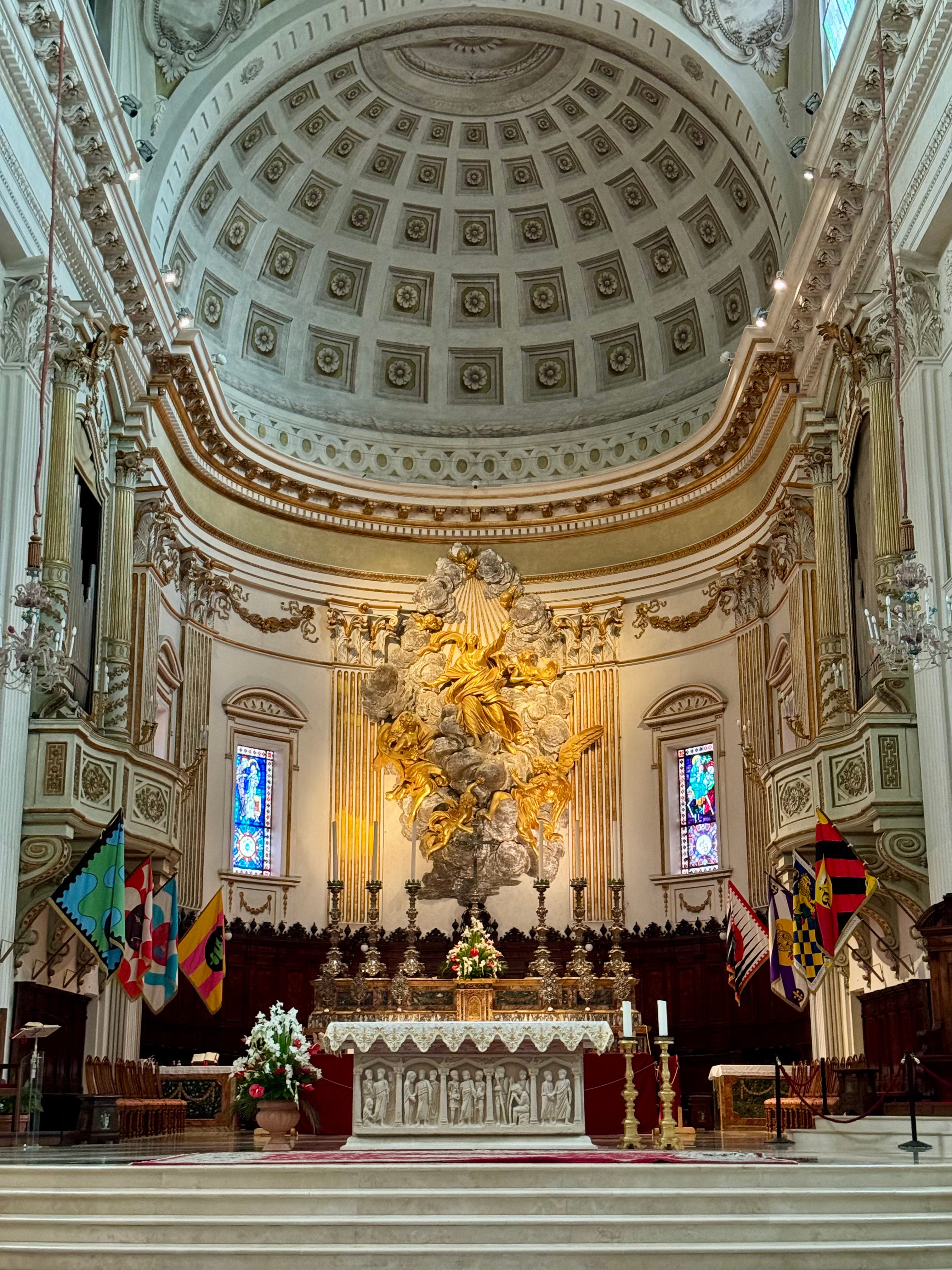
Detour: Torre di Palme, a micro-village on a cliff fifteen minutes away, offers one of the most dramatic coastal views in central Italy. One lane, one church, one belvedere: fifteen minutes to see, years to remember.
4. Recanati — Poetry on a hilltop
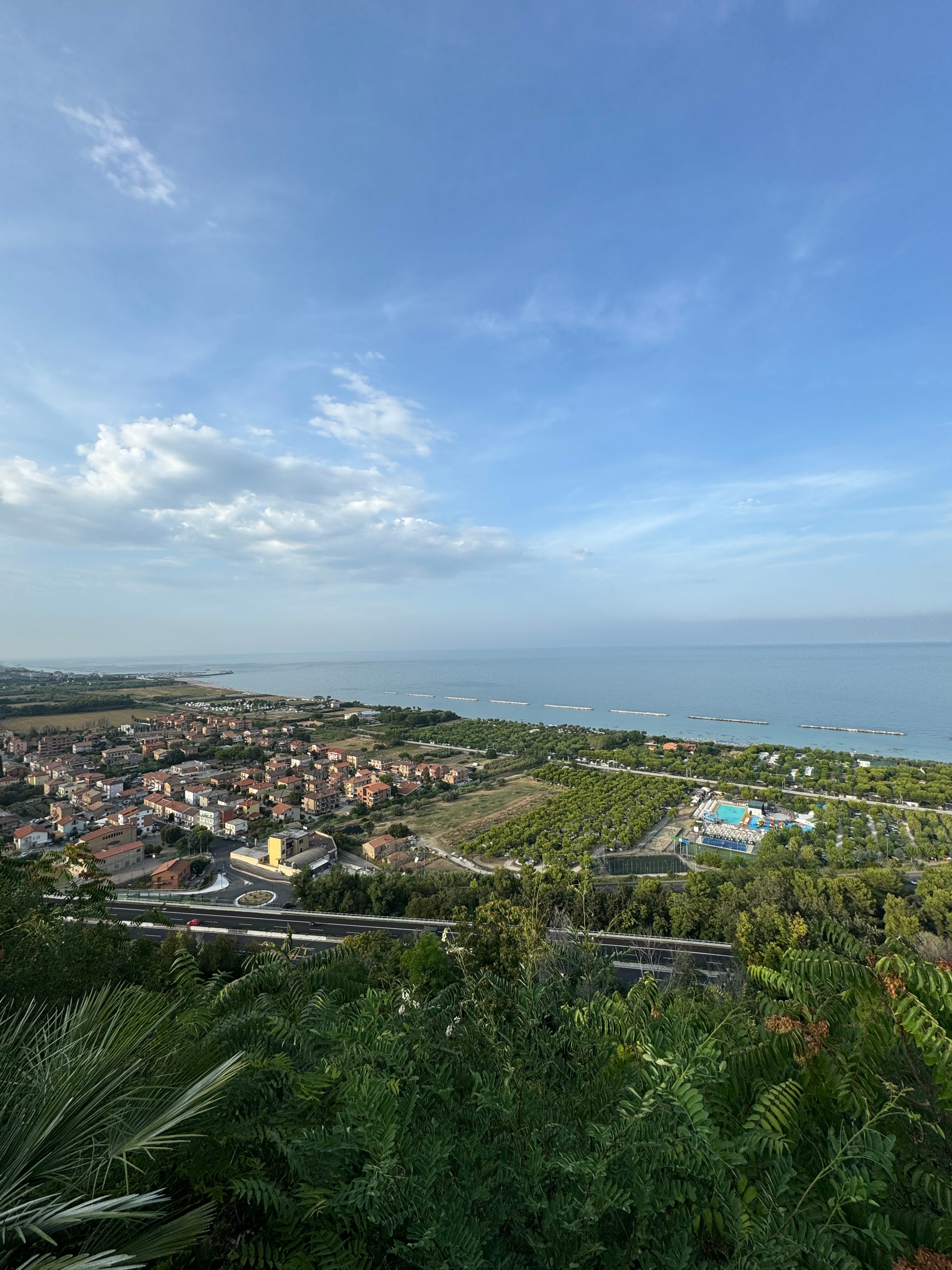
Italy’s greatest modern poet, Giacomo Leopardi, was born here in 1798. His family palazzo and library are preserved almost exactly as he left them. But Recanati’s real gift is its position: a ridge between the mountains and the sea. From the Colle dell’Infinito, the hillside that inspired his most famous poem, you see the Adriatic to the east and the Sibillini peaks to the west. The view really does suggest something infinite.
5. Conero Riviera — Sirolo and Numana
If you think Italy’s eastern coast is all flat sand and beach umbrellas, you haven’t seen the Conero. This limestone promontory south of Ancona creates a coastline so dramatic that first-time visitors reach for comparisons with Croatia or Greece. Spiaggia delle Due Sorelle, accessible only by boat, is framed by rock stacks rising from often transparent water. Sirolo, the village above, is a gem in miniature: a handful of streets, a piazza with a belvedere, and an atmosphere between fishing village and chic weekend escape.

Detour: The Frasassi Caves, less than an hour inland, are one of Europe’s largest karst systems. The scale is impossible to grasp from photographs.

6. Loreto — The hilltop basilica
Loreto exists because of a single building, and that building exists because of a single room. The Basilica della Santa Casa was constructed around what Catholic tradition holds is the house of the Virgin Mary, transported here from Nazareth in the thirteenth century. Whether you take the legend at face value or not, the result is one of the most important pilgrimage churches in Christianity and one of the most architecturally impressive in the Marche.

The basilica dominates the town from its hilltop. The exterior is fortress-like; the interior is not. The marble screen encasing the Santa Casa was designed by Bramante and decorated by some of the best sculptors of the Renaissance.
The sacristies contain frescoes by Melozzo da Forlì and Luca Signorelli. The piazza outside, designed by Carlo Maderno, has a grandeur that feels out of scale with the small town around it, which is, of course, the point.
Loreto gets busloads of pilgrims (literally) and relatively few casual tourists, which means the town itself is often overlooked. It’s worth a walk through the quiet streets behind the basilica, where the views toward the Adriatic and the Conero headland are excellent and free of crowds.
7. Urbino — The quiet capital
Save the best for last. Urbino is one of the great cities of the Italian Renaissance, and unlike Florence, it has never been overwhelmed by its own legend. The Palazzo Ducale, masterpiece of the warrior-duke Federico da Montefeltro, is reason enough to come.
Also, Raphael was born here; his childhood home is a few streets away, and you can visit it.
But Urbino’s real power is atmospheric: the university keeps it young, the steep streets create constant shifts in perspective, and the brick catches late-afternoon light in a way that explains why Renaissance painters trained here were so obsessed with luminosity.

My sister studied here, and so I got the opportunity to visit this stunning UNESCO site a few times. This year, when visiting Marche again, I will certainly stop by Urbino again.
Detour: Gradara, forty minutes north, is a storybook medieval fortress tied to Dante’s Paolo and Francesca. And the independent republic of San Marino (its own microstate, just across) is worth a half-day visit.
There you have it. I recommend spending at least a week, possibly more, in the Marche region, soaking up the sun and the slower-paced lifestyle. If that's your jam. If you'd prefer busier places, I'd recommend looking elsewhere, and Italy has, of course, plenty of places to scratch that itch.